
Kilter Hypnotherapy
Sports Performance coaching & Pain Management in Scotland
When Pain and Negative Thinking Spiral Together
Negative thinking spirals can be bad enough on their own. But when we throw pain into the mix, they can feel completely overwhelming.
You lose a point, and then you notice pain where it wasn’t before. Is it a flare up? Can you still win? Can you still even play? And then you’re in the spiral.
Actually, it’s exactly the same spiral we looked at last week:
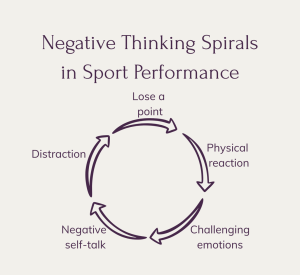
Figure 1: Negative Thinking Spiral (adapted from Fritch and Jekauc (2020) Self-Talk in Sport
This time, though, the physical reaction isn’t just tension or sweating. It’s literally painful, and it stops you in your tracks.
If you’ve experienced this, then you’ll know first hand that pain isn’t only physical.
All pain – no matter the cause – is created in the brain as a fear response.
You twist your ankle. You’re brain reads danger. It creates pain to get you to stop you moving.
But sometimes the brain creates pain when there is fear, but not physical danger.
And that’s what happens in a negative thinking spiral.
You lose a point, or miss your footing, or make some other small mistake. And your brain reads this as a dangerous situation, and has a fear response. And for many athletes whose brains know pain pathways, whether from disability or injury, the fear response activates as pain in that known pathway. Your injured shoulder, which you thought was better, suddenly twinges.
Here’s where it gets interesting for disabled athletes or athletes with chronic, nociplastic pain: pain can be the cause or the effect.
A pain flare-up can come along mid-match and affect how you think, feel and behave: pain as the trigger.
Or you can have another trigger, like a lost point, and the reaction can be a pain flare up: pain as the reaction.
Or even both – a pain flare up that builds as you start to worry about it, think negatively about it and focus on it: pain feeding itself.
For many people with chronic pain, the nervous system can become sensitised, amplifying pain signals when you’re stressed or anxious. This is a spiral I know from the inside, and it can feel so helpless when you’re in it – it often feels like it is all that exists.
Luckily, that isn’t the case. And, if you get stuck in a spiral like this mid-training or mid-competition, the good news is the solution is the same and for any other negative thinking spiral.
We choose an entry point into the spiral and stop it in its tracks:
We can learn the same triggers in hypnotherapy to counteract the trigger of the lost point or the flare-up.
We can reverse the physical reaction by focusing on breathing, releasing tension and on body awareness. These all directly modulate pain signals.
We can befriend the challenging feelings rather than resisting them, which reduces nervous system activation.
We can use a positive coping statement to interrupt the catastrophising of pain.
And we can refocus our attention toward what the body can do.
The trick, over time, is learning to treat pain like a check-engine light. Is the pain saying, “there’s something wrong physically – time for a break” or is it saying “this competition is scary and I don’t know how else to react”? Because this isn’t about “pushing through” pain, and sometimes we do need a break. This is about getting out of a negative thinking spiral when it causes pain.
The pain-thought spiral feels relentless, but it has the same entry points as any other spiral, and hypnotherapy is particularly well-suited to this because it works directly with these entry points – thoughts, behaviours, feelings, attention and the nervous system.
Ready to experience this for yourself? Download a free recording to try it out for yourself.