
Kilter Hypnotherapy
Sports Performance coaching & Pain Management in Scotland
If, like me, you’ve spent the last 2 weeks glued to the TV watching wheelchair curling and para snowboarding, you will have noticed that, in many of these competitions and races, the difference between gold and silver is minuscule.
In terms of fitness and technique, athletes are often on a par with one another, with tiny physical skill gaps between them.
So what makes the difference on competition day?
At elite and sub-elite levels, the performance differences frequently come down to the marginal gains of sports mindset under pressure.
Competing is not the same as training. The pressure of an audience and the stakes of winning or losing can be helpful for some, but can also cause anxiety.
And this anxiety narrows attention; often away from where it needs to be and towards the source of anxiety.
Under pressure, skills you’ve been building for months can suddenly become inaccessible to you, causing you to make mistakes you know you would never make in training.
And anxiety can disrupt timing, causing you to react too quickly or not quickly enough.
On top of these disruptions, para-athletes may experience additional performance pressure.
The journey to being a para-athlete is different from that of a non-disabled athlete and, for some athletes in the winter Paralympics now, this is their first time under this level of pressure. Their first time on television; their first time competing at a national level. This can be empowering for many athletes, but for others, another source of competition anxiety.
Another aspect that can be empowering for some is the idea of representing the disabled community. But this, too, can add another level of pressure that non-disabled athletes don’t have to deal with.
Para-athletes have more repeated disruptions in their training, due to injury, illness, accessibility issues or hospital visits. One client I worked with was left without her wheelchair at a competition after the airline lost it. This added a huge amount of anxiety non-disabled athletes would never have to consider. Going to competition knowing your training was disrupted by something like this can undermine confidence even in highly skilled athletes.
The anxiety caused by classification, and for some, the ongoing uncertainty of appeals or reclassification, adds yet another layer that non-disabled athletes simply don't face.
On the flipside of this anxiety is the flow state – which I discussed in post 1 – that is the reason for training and competing for many athletes. In flow state, everything else drops away other than the experience of competing. The crowd fades into the background and you feel completely focused on what matters. Time may slow down, and movements feel automatic and effortless. This is the mindset that carries a well-trained athlete over the finish line - and to a gold medal.
It’s not about “positive thinking”. Flow state is a state of nervous system regulation, belief, focus and trust in the body. Being able to access this flow state, this positive mindset, can allow athletes to access their skills consistently, not just on good days. And, on competition days, when nerves are high, it can be the difference between competing and winning.
The question is how we reach that flow state, not just on training days but when the pressure is high.
Mindfulness, self-efficacy, mental practice and self-talk have all been shown to improve performance, while tension, anxiety and fatigue have a measurable negative effect.
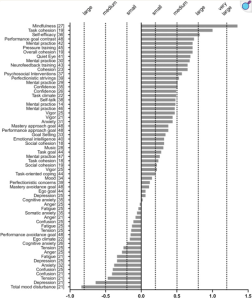
Working on both sides of this equation is exactly what I do with my clients.
I’ll be talking about exactly how this works in my next post – but, in the meantime, if you’re interested in how hypnotherapy can make the difference, why not download two free relaxing recordings here.